
WELCOME BONUS 300%
UP TO €2000 + 100
FREE SPINS
UP TO €2000 + 100
FREE SPINS
Home → Blackjack
Blackjack at Bassbet Casino: Variants, Rules and Payouts
Which hands are excluded from Surrender?
The Late Surrender rule allows a player to forfeit half the stake after the dealer checks for Blackjack, effectively reducing the house edge by 0.08 percentage points compared to standard play without this option.
This specific modification improves the Return to Player (RTP) by approximately 0.08 percent, whereas Early Surrender is significantly more valuable at up to -0.6 percentage points but remains extremely rare in modern online casino environments.
The payout for this action is exactly 50 percent of the original wager, meaning the player retains half their bankroll instead of losing the entire bet on a statistically losing hand.
Note that surrendering is only permitted after the dealer's initial two cards have been inspected for an immediate Blackjack, ensuring the rule applies only when the dealer does not hold a natural twenty-one.
No Double Down on three cards
Blackjack Split and Double rules dictate that players may split pairs into up to four separate hands, with Double After Split (DAS) allowing further doubling on new cards for a benefit of approximately 0.14 percentage points.
In contrast, restricting doubling to only two cards excludes the DAS advantage, which typically lowers the RTP compared to tables offering unrestricted doubling on any number of cards after a split occurs.
This limitation impacts the long-term theoretical return, as the inability to double down on three or more cards removes a high-value strategic opportunity available in more liberal game variants.
Players must adhere to the base strategy strictly under these conditions, as deviations become even more costly when advanced doubling options are systematically removed from the game ruleset.
Which table limits suit 20 EUR balance?
Lightning Blackjack hosted by Evolution requires a minimum bet of 1 EUR and a maximum limit of 2,500 EUR, featuring lightning multipliers up to 25x on winning hands within this range.
Quantum Blackjack Plus Live by Playtech sets a higher entry point with bets ranging from 1 EUR to 5,000 EUR, offering quantum multipliers up to 1,000x on three-card combinations totaling 21 points.
A player balance of 20 EUR comfortably covers the minimum stakes for both live tables, allowing for multiple rounds of play before the variance potentially depletes the account entirely.
Standard Blackjack Party tables start at 1.00 EUR and go up to 1,000 EUR, providing a broader safety margin for smaller balances compared to the higher volatility options found in other live dealer formats.
How many decks are in the shoe?
Single-deck Blackjack offers a superior Return to Player (RTP) of 99.85 percent with a house edge of just 0.15 percent, primarily because fewer decks reduce the probability of the dealer drawing a ten-value card.
Using one deck provides approximately 0.48 percentage points lower advantage for the casino compared to games using eight decks, although this benefit is often negated if the table pays 6:5 instead of 3:2 for Blackjack.
The use of six to eight decks increases the insurance side bet house edge to 7.47 percent, making it a highly unfavorable wager unless the player employs sophisticated card counting techniques during the shoe.
Most online variations utilize multiple decks to mitigate counting advantages, resulting in a standard house edge around 0.46 percent for games with six decks and liberal rules like Soft 17 standing.
Bonus 100 EUR with 10 percent credit
Tischspiele contribute only 10 percent toward the bonus wagering requirements, meaning every 100 EUR wagered on Blackjack counts as merely 10 EUR toward clearing the turnover obligation attached to the promotion.
This low contribution rate forces players to wager 1,000 EUR on table games to generate the equivalent of 100 EUR in credited progress, significantly extending the time required to unlock withdrawable funds.
Slots contribute 100 percent to the turnover, creating a stark contrast where slot wagers clear the requirement ten times faster than identical bets placed on live blackjack tables or digital variants.
The welcome offer includes a 300 percent match up to 2,000 EUR plus free spins, but the minimal table game credit makes high-stakes blackjack an inefficient method for converting bonus money into cash.
Blackjack variants at a glance
| Variant | Payout | House edge | Rule | Bet range |
|---|---|---|---|---|
| Blackjack Insurance / Versicherung (6–8 Decks) | 92.53% | 7.47% | Separate Nebenwette bis 50% der Hauptwette, wenn der Dealer ein Ass hat. Basisstrategie schreibt IMMER Ablehnung vor (außer Karten zählen bei True Count ≥ +3). Bei einem Deck Vorteil ≈ 5.88% | Insurance 2:1 |
| Blackjack Split / Double / H17 – Regel-Effekte | n.a. (Regel-Modifikatoren) | H17 +0.22 Prozentpunkte; RSA −0.08 Prozentpunkte; DAS −0.14 Prozentpunkte | Dealer Hits Soft 17 verschlechtert RTP um 0.22 Prozentpunkte; Resplit Aces verbessert um 0.08 Prozentpunkte; Double After Split verbessert um ca. 0.14 Prozentpunkte; 6 Decks statt 8 – ca. 0.02 Prozentpunkte. | Double – Einsatz ×2 mit einer Karte; Split – bis 4 Hände; Ass-Split meist mit einer Karte. |
| Blackjack 6 Decks, S17, DAS, DOA, Auszahlung 3:2, Basisstrategie | 99.54% | 0.46% | Dealer steht auf Soft 17; Verdopplung auf jeder Zweierkarte; Verdopplung nach Split erlaubt; keine Aufgabe. Basisstrategie ist für diesen Wert zwingend | Blackjack 3:2, normaler Gewinn 1:1, Insurance 2:1 |
| Blackjack Surrender (Late Surrender) – Regel-Effekt | n.a. (Regel-Modifikator) | −0.08 Prozentpunkte | Spieler gibt Hand nach Dealer-Blackjack-Prüfung auf, verliert die Hälfte des Einsatzes. Verbessert RTP um ca. 0.08 Prozentpunkte. Early Surrender ist wesentlich wertvoller (bis −0.6 Prozentpunkte), aber extrem selten. | Rückzahlung 50% des Einsatzes |
| Blackjack Liberal Vegas Strip (liberale Regeln, 3:2) | 99.72% | 0.28% | Günstigste Regelkombination: S17 + DAS + Resplit + Late Surrender. Standardabweichung 1,15 | Blackjack 3:2, Gewinn 1:1 |
| Blackjack Auszahlung 6:5 statt 3:2 (6 Decks) | 98.15% | 1.85% | Ersatz von 3:2 durch 6:5 fügt exakt +1.39 Prozentpunkte zum Vorteil des Casinos hinzu – stärker als jede andere Regeländerung. Bei $10 Einsatz zahlt Blackjack $12 statt $15. | Blackjack 6:5, Gewinn 1:1 |
Set session stop after 30 percent loss
The 300% welcome bonus up to €2,000 plus 100 free spins requires wagering on Slots at 100% contribution while Tischspiele count only 10%, meaning a €2,000 bonus needs €80,000 in slot turnover versus €800,000 in blackjack stakes. This steep disparity forces players to deplete their bankroll significantly faster when attempting to clear the requirement through table games compared to the intended slot path. Setting a hard limit at 30% of the initial deposit prevents catastrophic losses during this extended playthrough period, as the house edge compounds over hundreds of thousands of spins. The theoretical return for liberal rules sits at 99.72%, but the effective burn rate remains high due to the low contribution percentage.
Blackjack Liberal Vegas Strip offers an RTP of 99.72% with a house edge of 0.28%, yet its 10% bonus contribution makes it inefficient for clearing the €2,000 max bonus value. In contrast, Slots contribute 100% to the wagering requirement, allowing the same €80,000 turnover target to be reached much quicker despite typically lower RTPs. A player starting with a €500 deposit and taking the full bonus faces a €1,500 total balance, where losing just 30% equals a €450 drop. This specific threshold represents a manageable risk point before the mathematical expectation of the casino's advantage erodes the remaining funds entirely. Stopping here preserves capital that could otherwise vanish into the 0.28% edge multiplied by massive volume requirements.
Check table limit before the first bet
Lightning Blackjack from Evolution accepts bets ranging from 1 EUR to 2,500 EUR, providing a high ceiling for serious players seeking large exposure. Quantum Blackjack Plus Live by Playtech extends this further, accommodating wagers between 1 EUR and 5,000 EUR per hand. These upper limits define the maximum stake size available for clearing bonuses or managing bankrolls in live dealer environments. Players must verify these caps before funding their accounts, as exceeding them results in voided bets and potential account restrictions. The 2,500 EUR limit on Lightning tables is half the capacity of the Playtech alternative, offering different scaling options for high rollers.
Highroller from 500 EUR per hand
Quantum Blackjack Plus Live accommodates stakes up to 5,000 EUR per hand, making it suitable for players requiring high-limit exposure beyond standard tables. This platform applies quantum multipliers up to 1,000x on three-card combinations totaling 21 points, drastically altering the payout structure compared to traditional variants. While the base RTP is 99.57% under optimal strategy, the volatility increases significantly due to these rare multiplier events. Highrollers utilizing this table must account for the 10% contribution rate toward bonus wagering, which demands substantial turnover to unlock any associated promotional funds. The combination of high stakes and low contribution creates a unique risk profile distinct from slot-based progression.
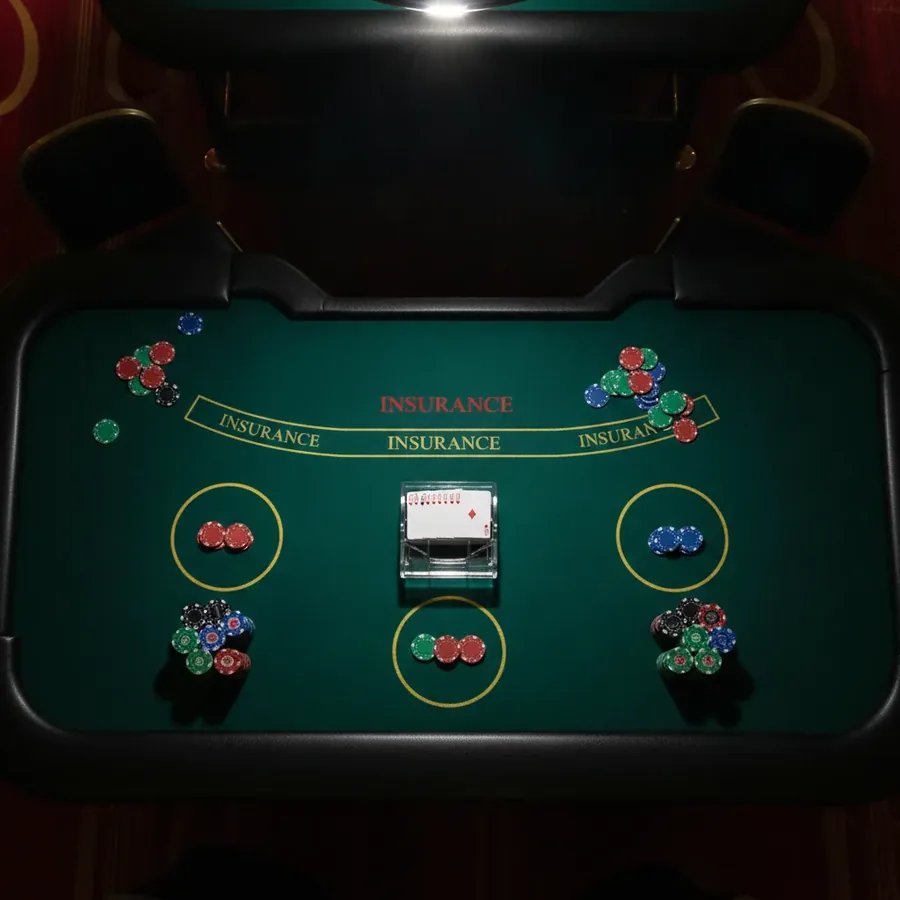
Insurance vs Even Money on Own Blackjack
Insurance is a side bet paying 2:1 when the dealer shows an Ace, but it carries a house edge of 7.47% for six to eight deck shoes. This negative expectation makes it statistically inferior to even money, which is essentially insurance taken on a natural blackjack against a dealer ace. Taking even money guarantees a 1:1 payout immediately, removing the risk of pushing if the dealer also holds blackjack. For a player using Blackjack Liberal Vegas Strip with a 3:2 payout, declining insurance preserves the higher long-term RTP of 99.72%. Accepting insurance reduces the overall return because the 7.47% edge on the side bet outweighs the benefit of avoiding a push.
Bust at 22: Stake Lost Immediately
Standard Blackjack rules dictate that any hand exceeding 21 points results in an immediate loss of the entire stake, regardless of subsequent card draws. Variants like Blackjack Split / Double / H17 do not alter this fundamental bust condition, maintaining the integrity of the core gameplay loop. When playing Blackjack 6 Decks with S17 and DAS, hitting on a soft 17 or doubling after split follows strict basic strategy to minimize bust probability. However, once the total reaches 22, the outcome is final and the 0.46% house edge applies to the lost unit. This rule ensures that the casino retains its mathematical advantage over infinite sessions, as no amount of splitting or doubling can reverse a busted hand.
Live stream with three cameras and OCR
The Evolution provider supplies the Lightning Blackjack table featuring multipliers up to 25x on winning hands, which directly impacts the potential return for players engaging with this specific live dealer variant. The RTP for this game is set at 99.56%, a figure that remains stable regardless of the random lightning strikes applied during gameplay sessions. This high theoretical return contrasts sharply with standard tables, offering a different risk profile for those seeking volatile outcomes in a live setting.
Playtech operates the Quantum Blackjack Plus Live table where quantum multipliers reach an impressive 1,000x on three-card combinations totaling exactly 21 points. The RTP for this variant stands at 99.57% when players adhere to optimal strategy, providing a clear mathematical advantage over many other live casino options. The maximum stake limit allows wagers up to 5,000 EUR per hand, catering to high rollers who require substantial betting limits for their strategies.
Evolution also produces the Blackjack Party table characterized by a lively atmosphere with two dedicated moderators guiding the action throughout the session. The betting range spans from 1.00 EUR to 1,000 EUR per hand, ensuring accessibility for both casual players and serious strategists alike. This format differs significantly from silent tables, adding a social layer to the mathematical expectations defined by the underlying house edge rules.
How much time is left for the decision?
Standard online blackjack rounds typically allocate between twenty and thirty seconds for player decisions, a duration sufficient for executing basic strategy moves like hitting or standing. This time constraint applies uniformly across most digital variants, forcing players to rely on memorized charts rather than intuitive guessing during rapid-fire gameplay sequences. Missing this window usually results in an automatic loss or default action depending on the specific software implementation used by the operator.
Live dealer games such as Evolution's Lightning Blackjack impose stricter timing windows due to the physical pace of the real-time card dealing process. Players must act before the dealer completes their hand, creating a pressure cooker environment that can lead to costly mistakes if concentration lapses occur. The presence of multiple camera angles and OCR technology ensures that every decision is recorded accurately, leaving no room for ambiguous inputs or delayed reactions.
The Quantum Blackjack Plus Live variant maintains similar time pressures while introducing complex multiplier mechanics that require quick mental calculations alongside standard strategic choices. With bets ranging from one to five thousand euros, the financial stakes amplify the urgency of making correct decisions within the allotted seconds available. Failure to act promptly often means forfeiting the opportunity to benefit from any quantum multipliers that might have been applied to the current hand distribution.
Bonus conditions often exclude Blackjack completely
Tischspiele contribute only ten percent toward the wagering requirements for the 300% welcome bonus up to 2,000 EUR plus 100 free spins, severely limiting their utility for clearing funds. In contrast, slots contribute one hundred percent, making them the preferred vehicle for meeting turnover obligations under these restrictive terms offered by the platform. This disparity effectively penalizes players who prefer table games by requiring ten times more volume compared to slot play to unlock withdrawable balance.
The 300% match bonus extends up to a maximum of 2,000 EUR, creating a substantial initial bankroll for new accounts upon first deposit qualification. However, the low contribution rate for blackjack variants means that playing six-deck games with a 0.46% house edge yields negligible progress toward unlocking these funds. Players relying on low-edge strategies will find their bonus balance frozen until they shift their activity predominantly to high-contribution slot machines instead.
Insurance bets in blackjack insurance scenarios pay 2:1 but are generally excluded from bonus calculations or treated as separate side bets with distinct wagering weights. Since the house edge for insurance stands at 7.47% when the dealer shows an ace, using it to protect against losses contradicts optimal strategy except in counting scenarios. Such deviations further complicate bonus clearance, as the higher variance and lower contribution rates make managing the 2,000 EUR cap increasingly difficult over time.
Soft 17: Dealer Hits or Stands
When the dealer hits soft 17, the house edge increases by 0.22 percentage points compared to tables where the dealer stands on all seventeen values including soft totals. This rule change negatively impacts the player's expected return, shifting the advantage slightly more firmly into the casino's favor across all standard betting scenarios. Players must adjust their basic strategy accordingly to mitigate this additional cost inherent in games featuring H17 dealer protocols.
Liberal Vegas Strip rules offer a more favorable environment with a house edge of just 0.28%, partly because the dealer stands on soft 17 allowing for better player opportunities. This configuration combines S17 with DAS and resplitting capabilities, resulting in a standard deviation of 1.15 which indicates moderate volatility for strategic players. The 0.22 point penalty for H17 makes Liberal Vegas Strip significantly more attractive for long-term retention of bankroll value.
One-deck blackjack with classic rules boasts an exceptional RTP of 99.85% and a minimal house edge of 0.15%, largely due to single-deck dynamics reducing card counting effectiveness less than multi-deck games. Removing the deck count variable simplifies strategy application while maximizing payout potential through the 3:2 blackjack reward structure. The absence of H17 penalties in these specific configurations provides one of the most mathematically sound environments for disciplined play.
Six-deck games with S17, DAS, DOA, and 3:2 payouts present a balanced option with a 0.46% house edge and 99.54% RTP for those following strict basic strategy. The combination of standing on soft seventeen and allowing doubling after splits creates a robust framework for minimizing losses over extended sessions. Players should verify these specific rule sets exist before committing funds, as even minor deviations can erode the theoretical advantage significantly.
Insurance Pays 2:1 Yet Still Costs Money
Blackjack Insurance pays out at 2:1 odds when the dealer shows an ace, yet statistical analysis reveals a house edge of 7.47% for this specific side bet in six-to-eight deck games. This negative expectation makes the insurance wager inherently unfavorable for average players who do not employ advanced card counting techniques to identify positive true counts. Accepting insurance without a True Count greater than or equal to three guarantees long-term erosion of the player's bankroll despite the attractive payout ratio.
The base strategy for standard blackjack dictates always declining insurance unless specific counting conditions are met, highlighting the disconnect between perceived safety and actual mathematical value. While the 2:1 payout seems protective against a dealer blackjack, the frequency of such events renders the bet unprofitable under normal circumstances. Players adhering to basic strategy will preserve their capital by ignoring this tempting but costly option available at most digital and live tables.
Comparing the 7.47% house edge of insurance to the 0.46% edge of a six-deck S17 game underscores the severe penalty imposed by accepting this side bet unnecessarily. The difference in expected loss per hour can be substantial, turning a manageable gaming session into a rapidly depleting financial drain. Savvy players recognize that preserving the integrity of their main hand strategy outweighs the short-term relief offered by insurance payouts.
Contact
Live - online chat
Banking









Providers












BassBet Casino 2026